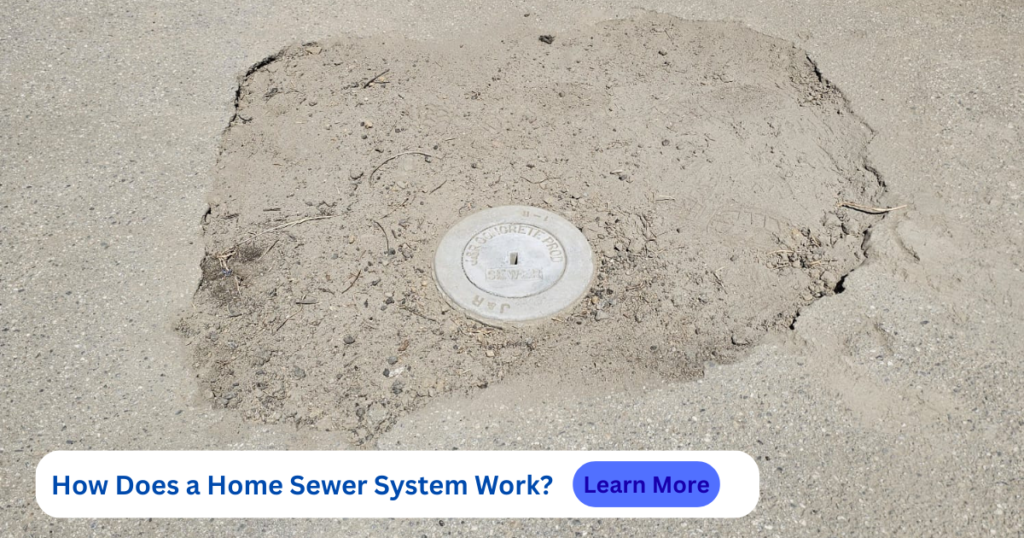
A home sewer system works by collecting wastewater from every drain in your house through small pipes that connect to a main line under your property. These pipes connect to larger underground main sewer lines that run under your street.
Now, we’ll break down how this happens in your home, step by step so you’ll know what keeps things flowing, what can go wrong, and how to stop messy, high-priced problems before they start.
What Is a Sewer System & How Does It Work for Homes?
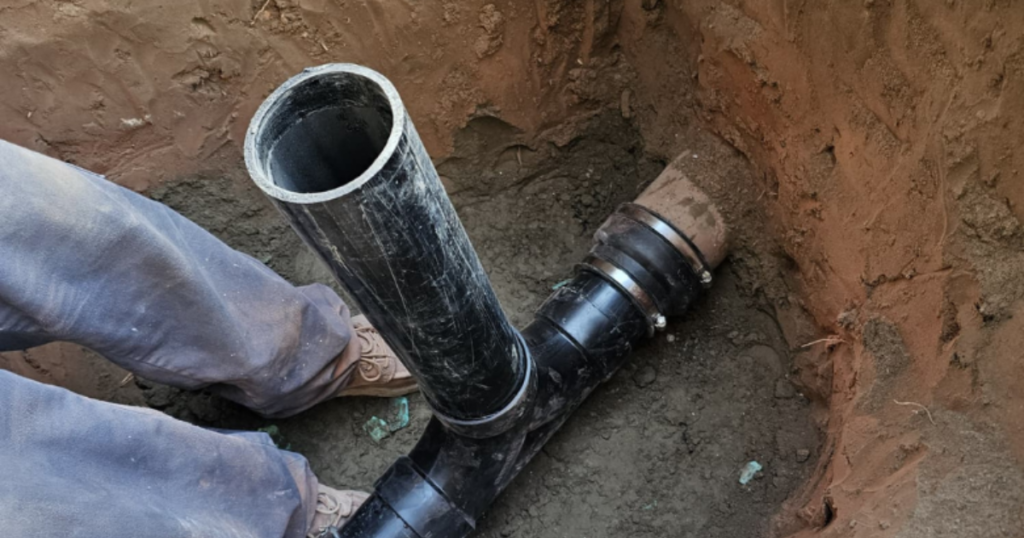
Every time you take a shower, wash your hands, or flush the toilet, that used water needs somewhere to go. That’s what the sewer system is for, it’s the network of pipes that carries all that dirty water away from your home.
Every pipe in your home’s drainage system is installed at a precise angle. Plumbers call this the “fall” or “pitch.” If the slope is too steep, water races away and leaves solids behind, causing clogs.
If it’s too flat, nothing moves. That perfect, gravity-driven slope is what makes the whole thing tick, quietly and reliably, 24/7.
How It Works for Homes (Sanitary Sewer System)?
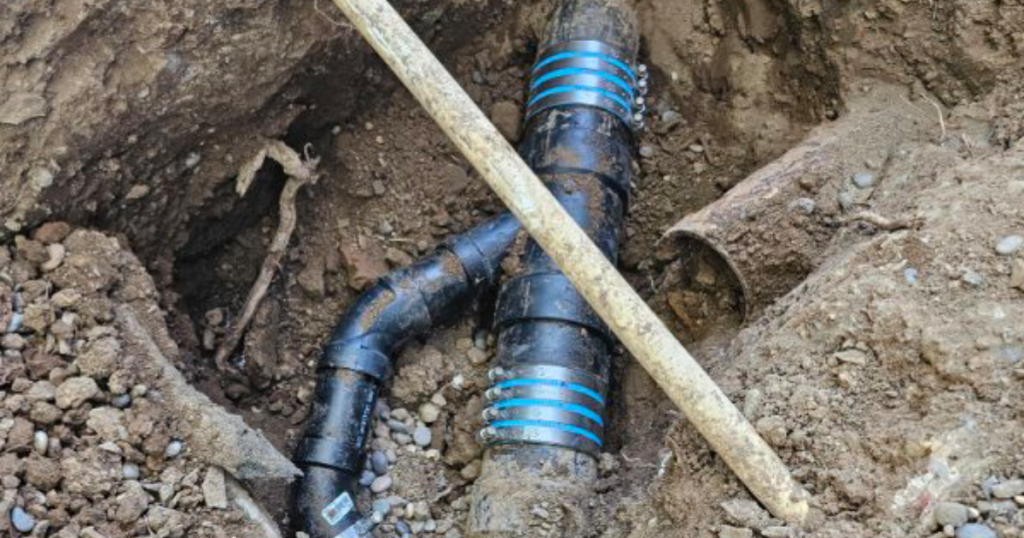
A sewer system comprises various components, including pipes, manholes, lift stations, and treatment plants. It follows a simple, five-step path:
Collection at Home
Every time you use water indoors, it doesn’t just vanish. The moment it swirls down the drain, it enters your home’s hidden network of drainage pipes tucked under floors and behind walls.
Lateral Line
All that water from different drains meets up and flows into a single, larger pipe called the lateral line. This is your home’s private sewer pipe. It starts at your foundation, runs under your lawn or driveway, and heads straight for the street.
Main Sewer Line
At the property line or under the street curb, your lateral line connects to the city’s main sewer line.
This pipe is big enough to carry wastewater from every house on your block, and it acts like an underground river flowing toward the treatment plant.
Gravity & Pumping
This whole system is built on a gentle downhill slope so gravity can pull the water along naturally. But if the land isn’t perfectly flat, the city installs pump stations.
These act like elevators for sewage, lifting it up over hills so gravity can take over again.
Treatment
All the wastewater from the community finally arrives at the treatment plant. This is where the real cleanup happens. Through a series of filters, tanks, and natural processes, everything you flushed or washed away is removed.
After treatment, clear water is left. It’s safe to be released into a local river, lake, or ocean, completing the cycle. Some communities even reuse this water for watering parks or farmland.
Think your home’s sewer line might have a clog or damage?
If you are experiencing slow drains, gurgling sounds, or backups, one of these steps might be blocked.
Our pro camera inspection goes deep into your home’s sewer lateral to find the exact source of the trouble. We pinpoint the problem right away, so you get the perfect fix without any prediction.
Types of Home Sewer Systems
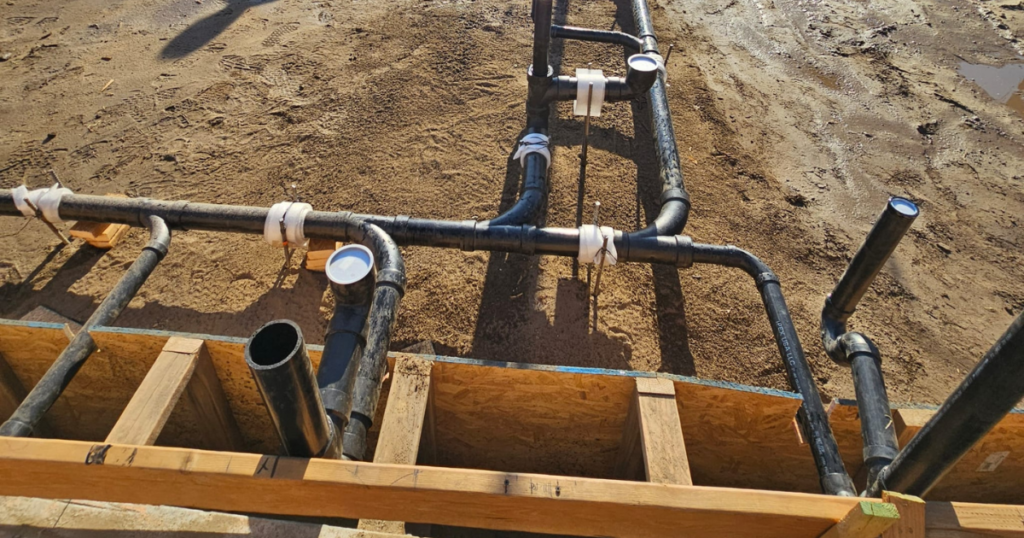
There are two main ways your home can handle wastewater: you’re either connected to a public sewer system or you have a private sepic system.
Public Sewer Systems (Municipal)
If you live in a town or city, you are likely connected to the public sewer system. This means all the wastewater from your home flows into pipes maintained by your local government. There are three kinds of public sewer lines:
- Sanitary Sewer: This is the one that handles everything from inside your house, toilet water, shower water, and sink water. It takes it all to a central treatment plant.
- Storm Sewer: You have seen the drains on street corners. These are part of the storm sewer system, which carries rainwater and runoff away to prevent flooding. It’s completely separate from the sanitary sewer.
- Combined Sewer: Some older cities have one pipe that carries both sewage and stormwater. The problem is during heavy rain, the system can get clogged and overflow.
Private Sewer Systems (Septic Systems)
If you don’t see a sewer line on your street, you probably have a septic system. This means you treat your own wastewater right on your property. Here are the most common types:
- Conventional Septic System: Wastewater flows into an underground tank where solids settle. The liquid then drains into a drainfield, a series of trenches filled with gravel, where the soil filters it clean.
- Mound System: Used when the soil drains poorly or the water table is too high. A pump sends the wastewater into a specially built, raised mound of sand and gravel for treatment before it reaches the natural soil.
- Drip Distribution System: Instead of trenches, this system uses a network of small, flexible pipes that slowly drip treated wastewater just below the ground’s surface.
- Chamber System: It uses lightweight plastic chambers instead of gravel in the trenches, creating more space for wastewater to soak into the soil.
Most homes on city water use public sewers, but some still rely on private septic systems. Knowing which setup you have is the first step to avoiding unexpected plumbing trouble.
Key Components of Your Home’s Sewer System
Residential sewer lines are the vital link that connects your home to the city’s main sewer system. To understand how this works, we start with the key components right under your home.
1. The Drain
Where water disappears from your sink, tub, or shower.
2. The Trap
The U-shaped pipe under each drain. It holds water to block sewer gases from entering your home.
3. Branch Lines
Small pipes that carry wastewater from each fixture (sink, shower, toilet) toward the main system. Most household clogs happen here.
4. Soil Stack
A large vertical pipe that carries wastewater down from upper floors. Its top vents through the roof to release gases and maintain air flow.
5. Main Drain Line
The large pipe that collects all wastewater from your home and carries it out of the house.
6. The Clean-Out
An access point (capped pipe) on the main drain line for plumbers to clear clogs or inspect the system.
7. Sewer Lateral
The pipe running under your yard that connects your home to the city’s sewer main. You own and maintain it.
8. City Sewer Main
The public pipe under the street that collects wastewater from the entire neighborhood. The city maintains it.
When a Sewer Component Fails: Repairs Made Simple
Small clogs in traps or branch lines can often be fixed with a plunger or drain snake. For deeper blockages in the main line, professional high-pressure jetting clears away tough grease and roots.
If pipes are cracked, trenchless sewer lining repairs them from the inside, no digging required. Before any repair, a sewer camera inspection pinpoints the exact issue, ensuring the right fix and saving you time and money.
The Wastewater Treatment Process Explained
Wastewater treatment is nature’s cleaning cycle, sped up by science. It takes used water through a step-by-step process to remove everything we put into it, turning it back into water clean enough to return to rivers or reuse on farms.
Here’s how it’s done, one stage at a time:
Stage 1: The First Cleanup (Preliminary Treatment)
First, the wastewater passes through screens that catch the big stuff, think sticks, plastic wrappers, and rags. Then, it flows into grit chambers where sand and gravel settle out.
Stage 2: Letting Gravity Work (Primary Treatment)
Next, the water moves into huge, quiet tanks. Here, the flow slows down so heavier solids can sink to the bottom, forming a layer called sludge. Oils and grease float to the top and are skimmed off.
Stage 3: Calling in the Cleanup Crew (Secondary Treatment)
The water is pumped into aeration tanks where air is bubbled through it. This oxygen fuels billions of hungry, beneficial bacteria and microorganisms.
They feast on and break down the dissolved organic matter, the soap, food waste, and other pollutants, leaving behind much cleaner water and more sludge.
Stage 4: The Final Polish (Tertiary Treatment & Disinfection)
For an extra-clean result, the water may be filtered one more time to remove any remaining fine particles.
Finally, it’s disinfected. This is typically done with chlorine or by passing the water under powerful UV lights to kill any remaining germs, viruses, and bacteria.
What Happens to All That Sludge?
The sludge collected from the primary and secondary tanks isn’t wasted. It’s treated separately, often digested to break it down further and then dewatered.
In many areas, treated biosolids can be safely used as nutrient-rich fertilizer for non-food crops. This process turns waste into a helpful resource while protecting our local environment.
When Your Sewer System Has a Bad Day: Common Problems & Signs
A slow drain or a faint gurgle might seem small, but it’s often your sewer system’s first cry for help. The most common issues come from what we put down our drains and what nature throws at our pipes.
The Main Problems:
- Clogs and Blockages: Hair, cooking grease, food scraps, and items like “flushable” wipes don’t just disappear. They cling to pipe walls, building up over time until the flow completely stops.
- Tree Root Intrusion: A crack or loose joint in an underground pipe is like a welcome mat for thirsty tree roots. They can invade, grow inside, and cause a stubborn, living blockage that can eventually crack the pipe itself.
- Aging and Damaged Pipes: Materials like cast iron can corrode, clay pipes can crack, and shifting soil can cause sections to sag (forming a “belly”) where waste collects instead of flowing freely.
Early Warning Signs Homeowners Shouldn’t Ignore
Don’t wait for a sewage backup. Call a plumber if you notice:
- Multiple drains
- Gurgling sounds
- Sewage odors
- Water backing up
- Lush patches of grass
How to Maintain & Protect Your Sewer Lines?
When you notice a sewer problem, act smart. First, avoid chemical drain cleaners, they can damage pipes. Instead, call a professional plumber. They can perform a camera inspection to accurately diagnose the issue, whether it’s roots, a clog, or a cracked pipe.
Don’t wait. Addressing the problem quickly can mean a simple fix now, rather than a costly and disruptive repair later. Listening to early warning signs and getting expert help is the key to protecting your home and saving money.
Facing Sewer Line Problem? Get Your Free Estimate Today
If you’re noticing slow drains, unpleasant odors, or backups in your home, these are very common issues. Sewer line issues are common and rarely fix themselves. Don’t let a small clog turn into a major disruption, getting a professional assessment is the first and most important step.
At All Bros Plumbing, we make it easy and stress-free to find out what’s wrong and what it will take to fix it. As your trusted local experts, we offer fast, same-day service and transparent, upfront pricing.
Call us today for a complimentary sewer line inspection and estimate. Let’s solve your problem before it gets worse.
Frequently Asked Questions
Can you explain how sewer systems work and what happens to the water that goes down the drain in sinks and showers?
When you flush or drain water, it travels through underground pipes to a treatment plant. The water is cleaned using screens, helpful bacteria, and filters to remove waste. Once purified, it is safely released back into nature.
How do sewage systems work in large flat cities where gravity alone would not pull down the water towards a treatment plant?
In flat areas, cities use lift stations (pumping stations) to move waste. These stations push the wastewater uphill to a higher point. From there, gravity takes over again to keep the water flowing toward the treatment plant.
What is the most common mistake homeowners make that leads to sewer problems?
Flushing “flushable” wipes and pouring grease down the kitchen sink are the top mistakes. Unlike toilet paper, wipes don’t break down and grease hardens inside pipes, both cause serious clogs in your home’s sewer line.
How to find a local sewer line repair company?
Ask neighbors or search online for “sewer line plumbing experts”. Choose a licensed, local team that offers camera inspections and clear estimates to ensure the job meets our local codes.