
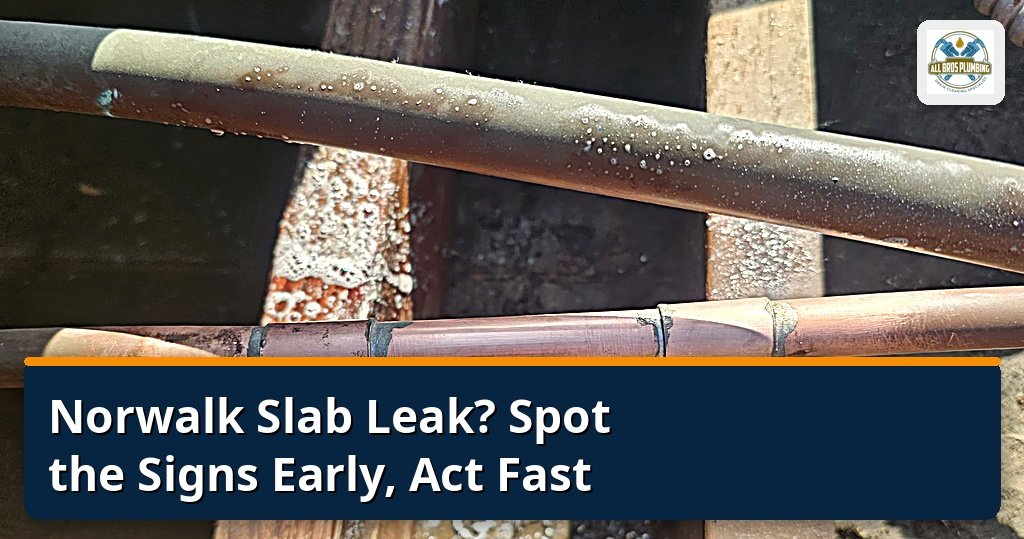
The clearest signs of a slab leak are a water meter that moves with every tap off, a warm patch on the floor, and the sound of running water at night. One sign alone is a reason to run the 15-minute meter test, while two together are a reason to call.
A slab leak is a pressurized water line leaking under the concrete floor of your home, and finding it early is what saves the floor above it. Norwalk’s 1950s slab homes are the ones most at risk, because their copper lines have been under concrete for more than 70 years.
Key Takeaways
- A moving meter with everything off is the strongest single sign.
- A warm patch on the floor points to a hot water line under the slab.
- A faint hiss at night, with all fixtures off, is pressurized water escaping.
- Two signs together, plus a moving meter, mean call now.
- Norwalk’s 1950s slab homes carry copper lines under concrete, now 70+ years old.
What are the signs of a slab leak, ranked by how much each one proves?
No single sign proves a slab leak, so signs are ranked by weight. Strong signs are a moving meter, a warm patch on the floor, and the sound of water at night. Medium signs are damp carpet, a swollen baseboard, a musty smell, cracks, or a heater that runs more. A rising bill or lower pressure alone is weak.
| Sign | Weight |
|---|---|
| Water meter moves with everything off | Strong |
| Warm or hot patch on the floor | Strong |
| Sound of running water at night | Strong |
| Damp carpet, swollen baseboard, musty smell | Medium |
| Cracks, lifting tile, heater runs more | Medium |
| Rising bill, lower pressure | Weak alone |
The rule is simple: no single clue proves a leak under the floor. Two or three together, backed by the meter test, make the case.
These signs overlap with the wider signs your plumbing system needs repair, and the same rule applies there: two signs together deserve a call.
Hot line, cold line, or drain line: how do the signs differ?
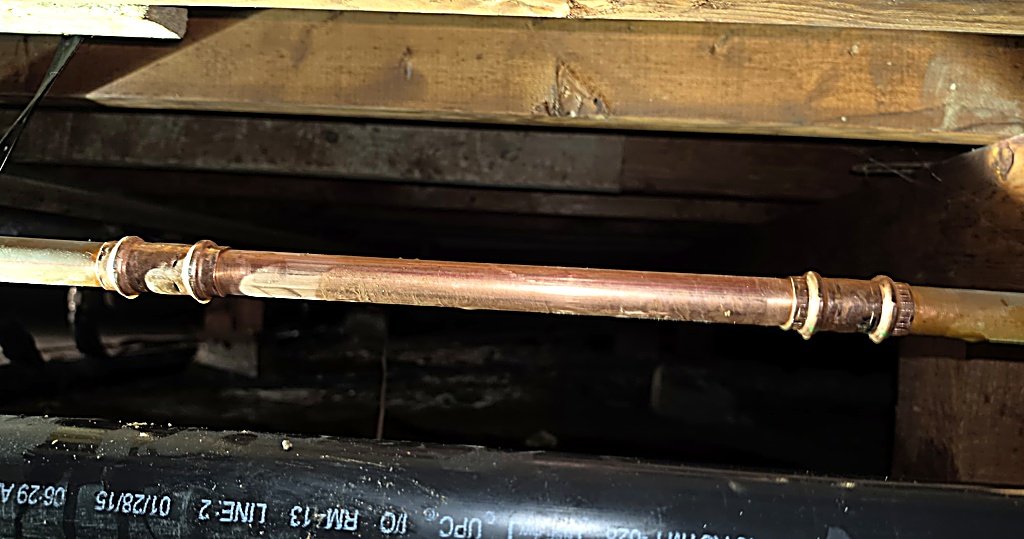
The signs differ because each line leaks differently. A hot line leak shows as a warm patch, a heater that runs more, and hot water that runs out sooner. A cold line leak shows as the sound of water, damp flooring, and a musty smell.
A drain leak shows as slow drains, a sewer smell, and dampness after showers. The meter test is the line between them. It catches supply leaks, hot and cold, and it misses drain leaks completely, because the meter only measures water coming into the house. A drain leak needs a camera inspection, not a meter test.
How do you run the 15-minute meter test?
Turn off every tap, appliance, and irrigation zone, find the meter in the box near the curb and watch the triangle or star leak indicator.
Note the reading, wait 15 minutes without using water, and read it again. If the reading changed, water is leaving the house, and the next step is to close the main shut-off and look again.
1. Turn off everything that uses water: taps, dishwasher, washer, ice maker, and irrigation.
2. Find the meter in the box near the curb.
3. Watch the small triangle or star leak indicator.
4. Note the reading, wait 15 minutes, and read it again. A change means water is leaving.
5. Close the main shut-off and look again. If the dial stops, the leak is inside the house.
If it keeps moving, the leak is in the line between the meter and the house, so call a plumber for leak detection.
What looks like a slab leak but is not?
Several things look like a slab leak. Dampness near a shower means a shower pan or grout problem, while a warm floor comes from sun, radiant heat, or a hot duct. Cracked tile means settling, a high bill comes from irrigation or a pool, and the sound of water comes from a water heater or a neighbor’s line.
| What you see | What it usually is | How to tell |
|---|---|---|
| Damp near a shower | Shower pan or grout | Dries after days without showering |
| Warm floor | Sun, radiant heat, or a hot duct | Cool at night, warm only by day |
| Cracked tile | Settling | Meter still, no other signs |
| High bill | Irrigation, a pool, or guests | Bill drops when irrigation is off |
| Sound of water | Water heater or a neighbor’s line | Stops when the main is closed |
The meter test settles most of these. If the meter is still with everything off, the problem is not a supply leak, and the look-alike is the answer.
Why are slab leaks common in Norwalk homes?
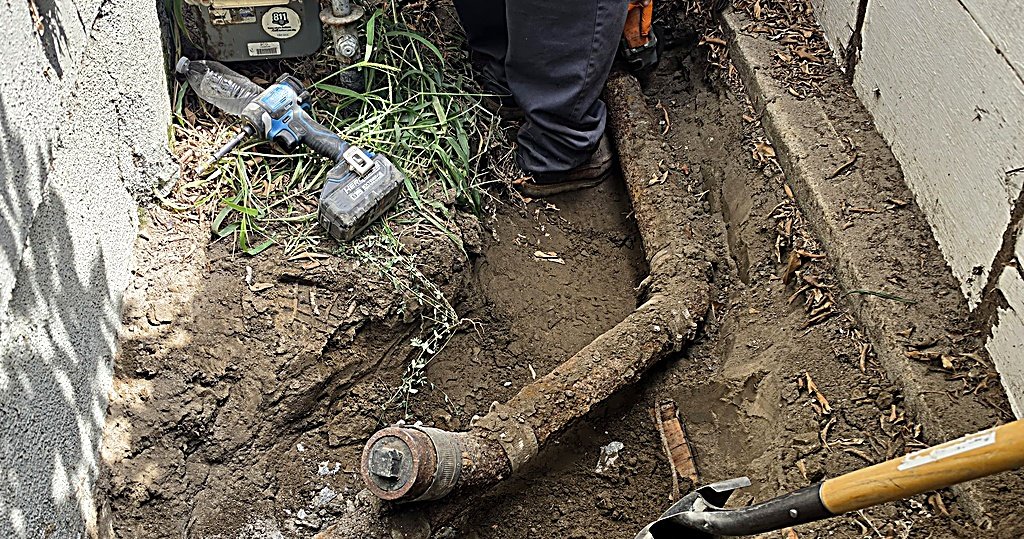
Most Norwalk homes sit on 1950s concrete slabs with original copper or galvanized pipes buried underneath that are now over 70 years old. Galvanized pipes rust from the inside, while copper pipes wear down from decades of hot water expansion and local soil. Added joints from garage conversions also create weak spots under the slab.
What happens if you wait?
Waiting turns a small leak into a bigger repair, because water under a slab never stops. In the first days the soil soaks and meter moves, with nothing visible. In the first weeks a warm patch, a sound, and a rising bill appear. In the first months damp carpet and musty smell follow, and later come cracks and lifted tile.
| When | What you see |
|---|---|
| First days | Soil soaks, meter moves, often nothing visible |
| First weeks | Warm patch, faint sound, rising bill |
| First months | Damp carpet, swollen baseboard, musty smell |
| Longer | Cracks, lifted tile, mold, uneven floor |
In Norwalk, Cal Water requires homeowners to fix leaks within five business days under local Norwalk water restrictions. If your meter is spinning fast, shut off your main water valve right away. Call All Bros Plumbing at (562) 341-0831 for fast service in Norwalk, with emergency arrival in 60 minutes or less.
Conclusion
No single sign proves a slab leak under the floor. What proves it is a pattern, which means two or three signs pointing the same way, backed by a meter that moves with everything off.
The next step is not opening the floor, it is locating the leak with listening equipment and a thermal camera, so the floor is opened once, in one place, or not at all, if a reroute fits. All Bros Plumbing locates first, then explains the fix: spot repair, reroute, or repipe. Repiping work in Norwalk follows the 2025 California Plumbing Code, Title 24, adopted in Los Angeles County through Title 28.
Frequently Asked Questions
Can a slab leak be fixed without breaking the floor?
Often, yes. Once the leak is located with thermal imaging and acoustic listening, the fix is usually a reroute through the walls or attic, or a spot repair through one small opening. The floor is only opened where the leak is, and only if a reroute does not fit.
How do I know if the leak is on the hot or the cold line?
A warm patch on the floor and a water heater that runs more point to the hot line, while a leak with no warm patch and no heater change points to the cold line. A plumber confirms it by testing the hot and cold lines separately.
Will my water bill always rise with a slab leak?
Usually, yes, because a pressurized leak runs day and night. A very small leak or a drain leak may not move the bill much, which is why the meter test is the reliable check, not the bill alone.
How long does it take to locate a slab leak?
Locating usually takes a single visit with thermal imaging and acoustic listening. The repair time depends on what is found: a reroute, a spot repair, or a repipe.
Should I shut off the water if I suspect a slab leak?
If water is escaping fast, the meter is spinning, or water is coming up through the floor, shut the
main off and call now. If the signs are slow, run the meter test first, then call with the result.
Two signs and a moving meter is enough.
Call All Bros Plumbing at (562) 341-0831. We find the leak with thermal imaging and acoustic listening before any floor is opened, then show you the fix: a reroute, a spot repair, or a repipe. 24/7 in Norwalk, and a free on-site estimate before any major work. The floor above the leak is worth saving, and finding the leak first is how you save it.

